

Node.js
Node.js is a JavaScript run-time environment built on Chrome’s V8 JavaScript engine; it implements the reactor pattern, a non-blocking, event-driven I/O paradigm. Node.js is well good for building fast, scalable network applications, as it’s capable of handling a huge number of simultaneous requests with high throughput.The way to improve the scalability
Before entering into the concept, let’s know what is Scalable? A word Scalable refers to expandable, which means the number of users will access the application from anywhere at the same time. Ensure your application is highly scalable; it can handle a large increase in users, workload or transactions without undue strain.Regarding increasing the scalable, we are going to explain the options for concurrent users.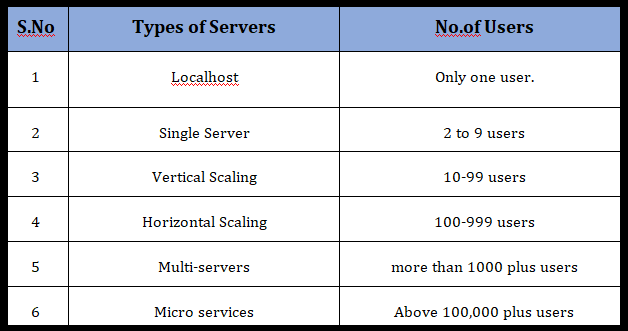
1. Localhost
Any application that runs on a developer machine for development purpose is hosting application locally. Generally, it is for the use of only one user, so there is no need to worry about scaling factor.2. Single server
A single server system can accommodate around 1 to 9 concurrent users. Assume, your application will be used locally then the deployment will be carried out locally. It’s fine to do in a single server. For hosting the node.js application one can use Nginx as the webserver. If you are using a single server application for few users well enough. It is simple to implement the single server and very much efficient for a few users. The requirements consist of only one CPU and 1 GB RAM, which is equivalent to web server AWS t2.micro / t2.nano.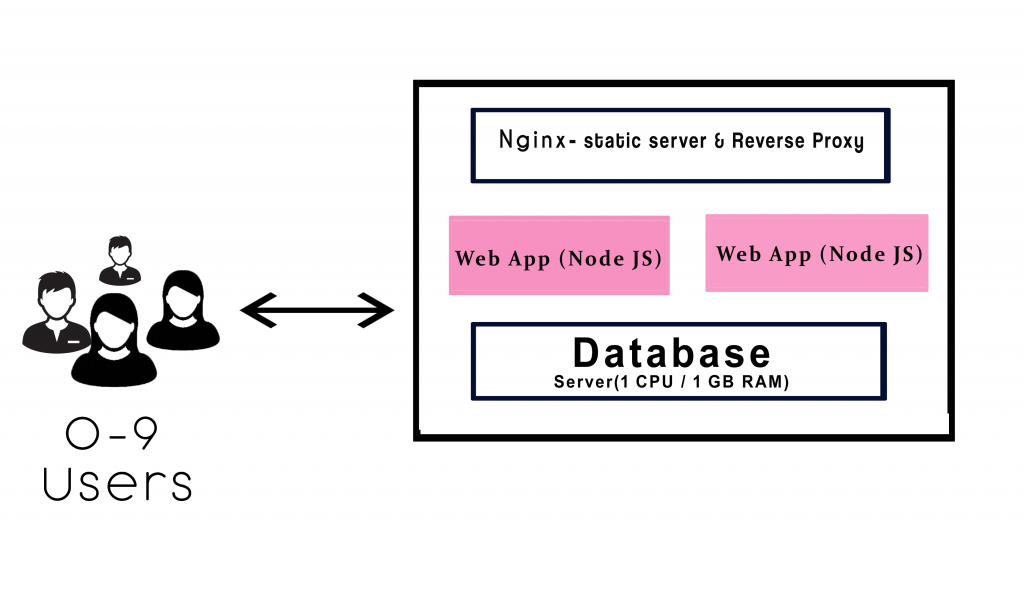
3. Vertical scaling
The term “vertical” states that to manage by adding extra capability or power to a single component. When the server begins to start slower or longer time to execute at the level we will transform to the vertical scaling. In vertical scaling the requirements consist of 4 GB RAM, which is equivalent to web service t2. medium.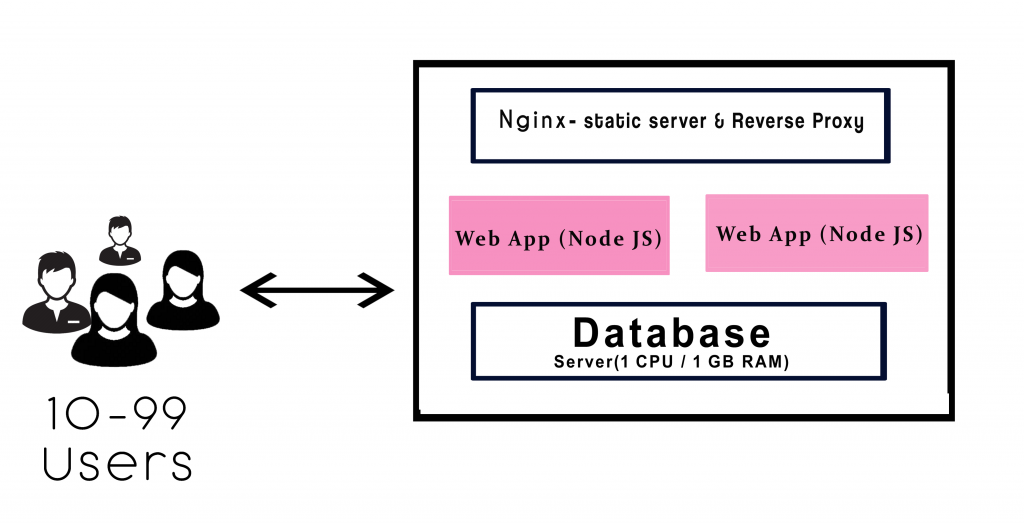
4. Horizontal scaling
The Scaling horizontally, which means adding more machines to scale up your pool of resources. This concept will work out in the enterprise from the level of 100 to 1000 employees. Whenever the app responses get slowdown from the database you have to upgrade to 16 GB RAM. Cassandra, MongoDB is suitable for horizontal scaling. It provides for implementing a scale from smaller to a bigger machine. Companies like Google, Facebook, eBay and Amazon are using horizontal scaling.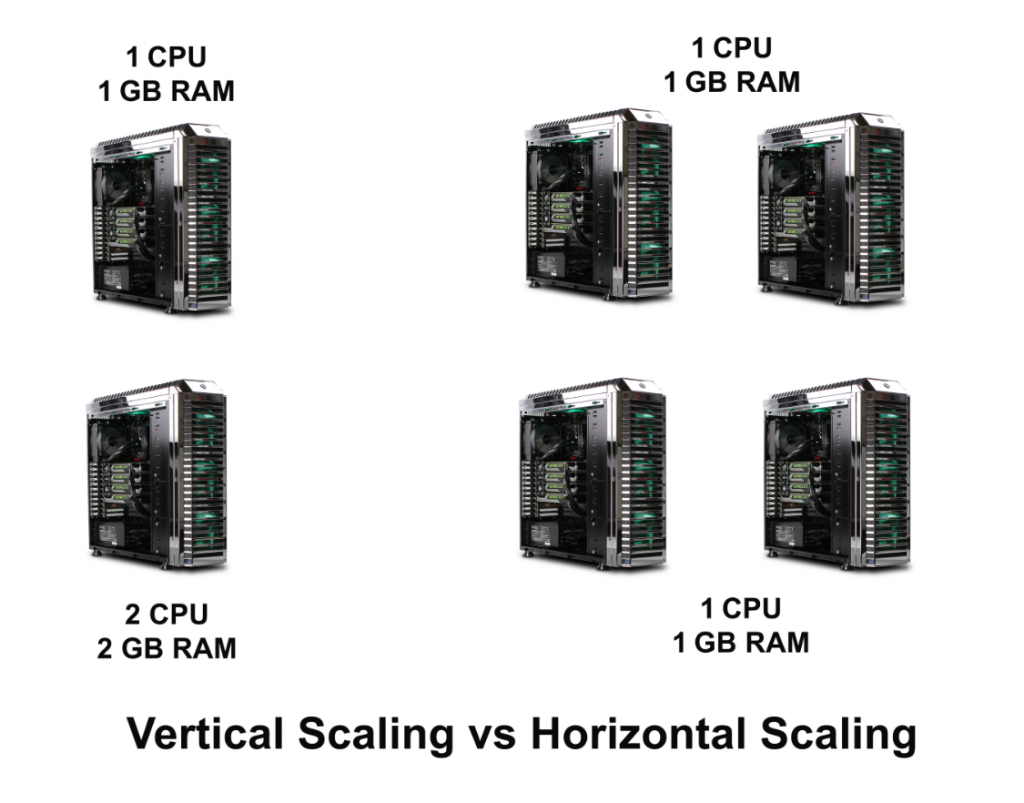
Differences
In horizontal scaling, you can add more machines to scale dynamically. If any system fails, then another system will handle the process. No worry about the process failing. It will bring high I/O concurrency, reducing the load on existing nodes and improve disk capacity.In vertical scaling, the data resides on a single node, it gets easy to slow down when the load increases. If the system fails to process, then the whole system may get a collapse. Horizontal scaling is little bit cost-effective than the vertical scaling.5. Multi-servers
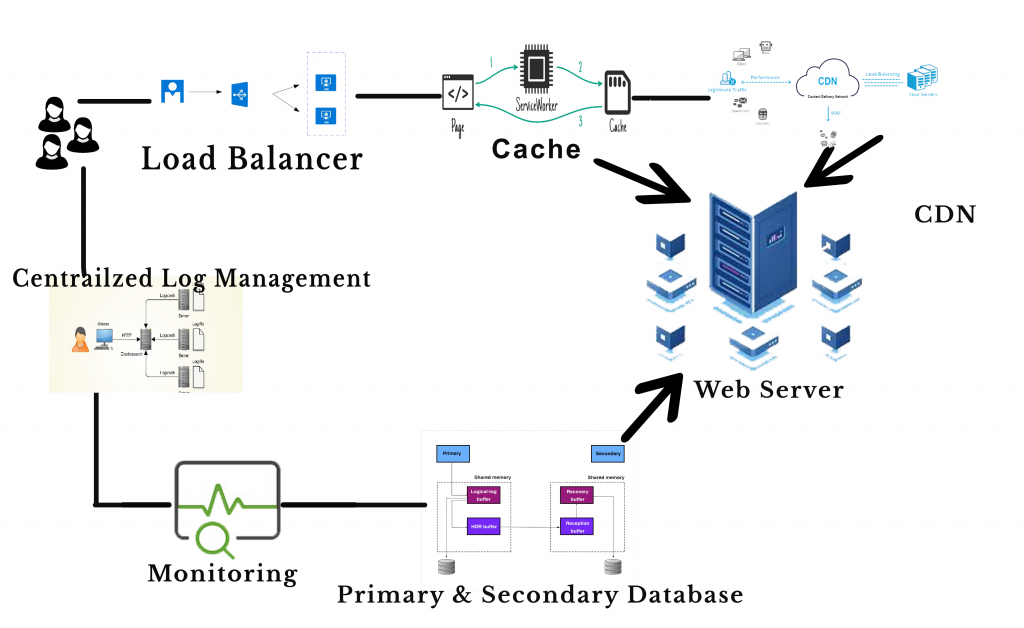
6. Microservices
Most of the giant companies like Netflix, Uber, Amazon are using microservices. The goals of microservice are to separate the services like search, build, configure and other management functionalities from database instances and deploy them as a separate microservices. Each of these services will take care of their tasks and can communicate with other services via API.Traditionally we use the monolithic database. In monolithic, we can’t extend our application for several users. All modules are composed together in a single piece. As your business growing up, you have to move on the microservices. This will take to the next level in your production.Conclusion
Hope this article helped you with scalability issues and helped you understand a bit better of how you can use the available services perfectly.You can read our blogs here & hereOur services:
- Staffing: Contract, contract-to-hire, direct hire, remote global hiring, SOW projects, and managed services.
- Remote hiring: Hire full-time IT professionals from our India-based talent network.
- Custom software development: Web/Mobile Development, UI/UX Design, QA & Automation, API Integration, DevOps, and Product Development.
Our products:
- ZenBasket: A customizable ecommerce platform.
- Zenyo payroll: Automated payroll processing for India.
- Zenyo workforce: Streamlined HR and productivity tools.